- 1 What You’ll Find Inside
- 2 The Flow of Kyoto Life Along the Kamogawa River
- 3 The Soul of the City: Kamogawa’s History and Identity
- 4 Kamogawa River Throughout the Seasons
- 5 Iconic Spots Along the River
- 6 Popular Things to Do Along Kamogawa
- 7 5 Nearby Sightseeing Spots
- 8 Dining and Nightlife: Kamo River Noryo Yuka
- 9 Directions to Kamogawa River
What You’ll Find Inside
- Best times to visit: April for cherry blossoms; May – September for open-air dining on Noryo Yuka; October – December for autumn leaves.
- Things to do: Popular activities you can do along the Kamo River include biking, walking, running, picnics, studying, and more.
- Places nearby: Many spots are located near the Kamo River, including Shimogamo-jinja Shrine, Pontoncho Alley, Nishiki Market, and more.
- Where to eat: Dining on the river decks is available from roughly May through September. You can also find restaurants near Kamogawa River in Pontoncho Alley and many side streets.
The Flow of Kyoto Life Along the Kamogawa River
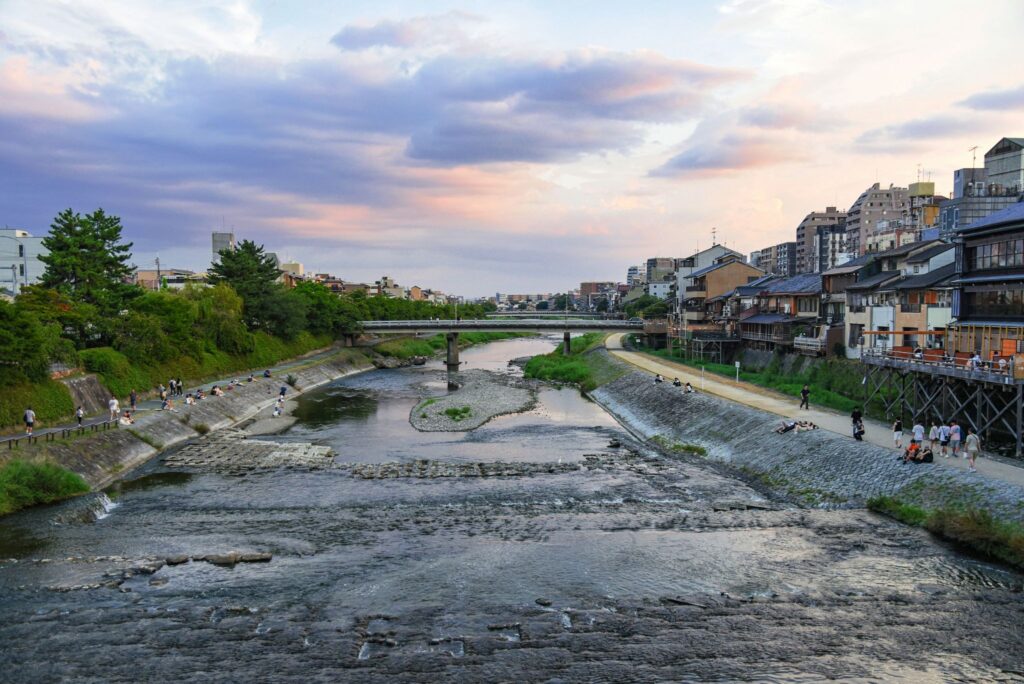
The Kamogawa River, sometimes also written as Kamo River in some guidebooks, runs north to south through Kyoto’s city center. The river is where the city comes to breathe. It’s where students practice trumpet in the morning, where couples sit on the banks as the sun goes down, and where the ancient capital suddenly feels approachable, lived-in, and real.
This river offers something for everyone. Are you seeking a romantic summer dining experience on noryo yuka decks? Perhaps you want to find the best cherry blossom spots. Or maybe you just want to understand the soul of Kyoto. This river is the answer.
So, let’s take a walk. Here is everything you need to know to enjoy the Kamogawa like a local.
The Soul of the City: Kamogawa’s History and Identity
The Kamogawa River has been integral to Kyoto’s identity since ancient times.
In the Heian period, it was a vital lifeline for city planning, agriculture, and the aristocracy’s enjoyment.
By the Edo period, its function shifted towards commerce as the banks bustled with merchants and craftsmen, and the river became crucial for transporting goods and linking the capital with other regions.
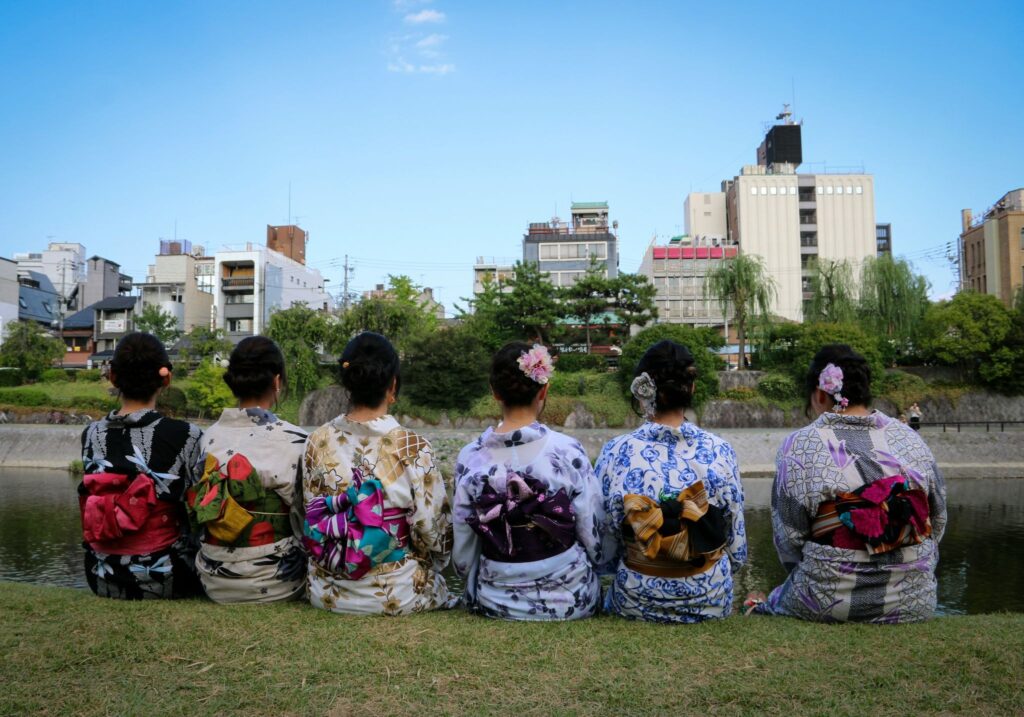
The river today serves as a meeting place for locals of Kyoto, offering a break from everyday stress and opportunities to socialize through events, celebrations, hobbies, and other activities. You’ll often see locals walking their dogs, university students studying on the grass, and artists sketching the mountains in the distance.
It’s a place where the stiff formalities of Japanese culture loosen up just a little bit. If you’re feeling overwhelmed by the crowds at the major temples, retreating to the riverbank is a fantastic way to relax and reset.
Kamogawa River Throughout the Seasons
Spring
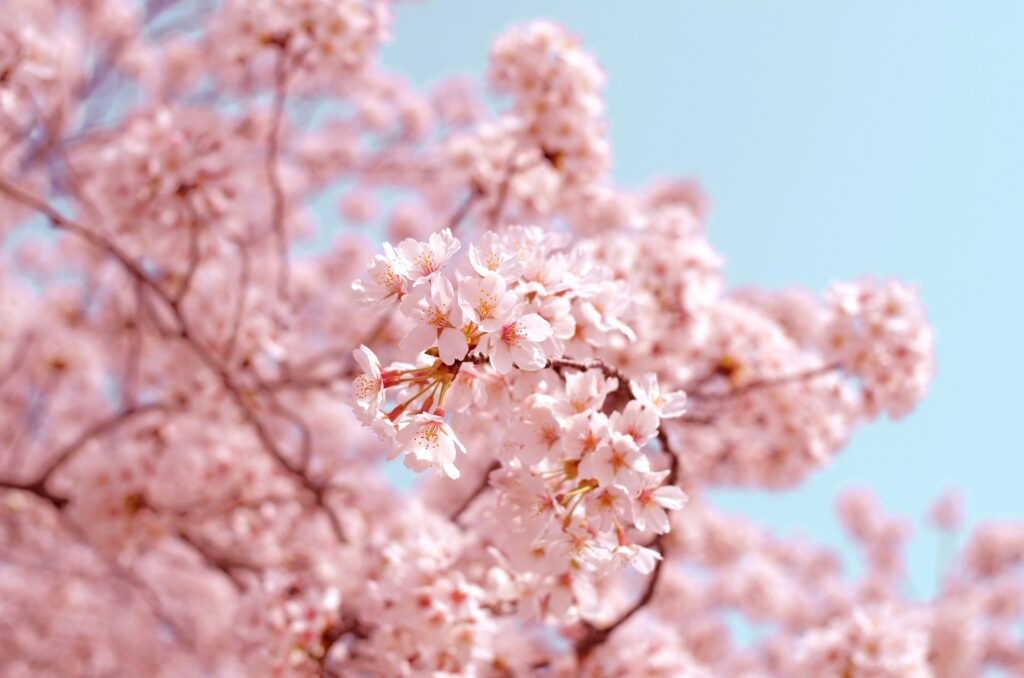
Come April, the river transforms. The banks, particularly the northern sections near the Botanical Gardens, become a literal tunnel of soft pink sakura.
Families, friends, and coworkers often lay out blue tarps, friends share bento boxes, and the petals drift onto the water’s surface, turning the river pink.
Summer
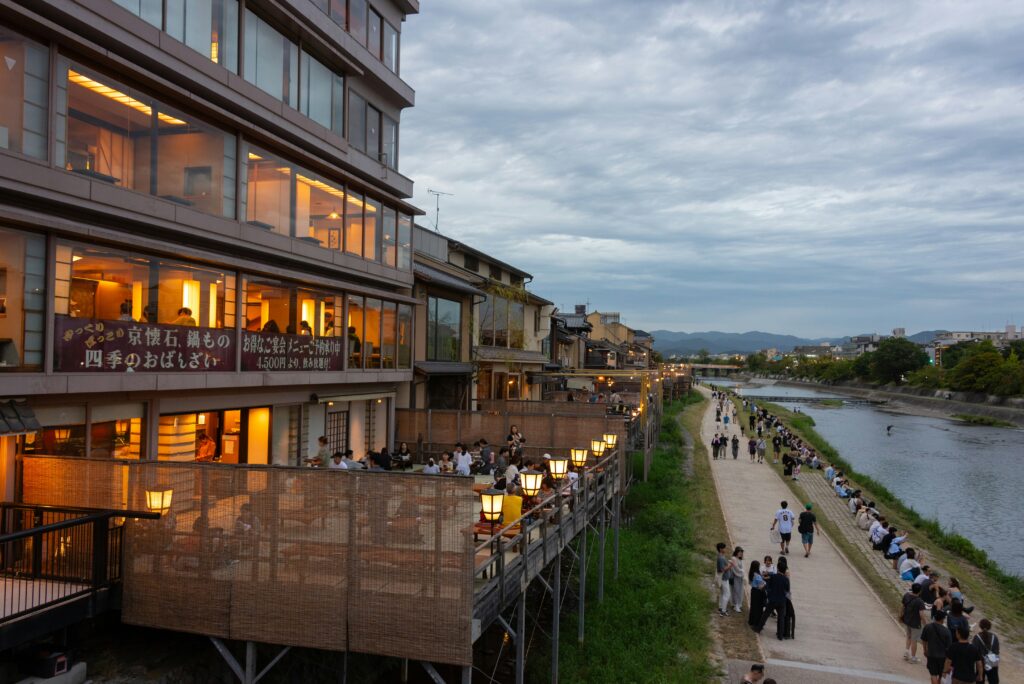
Kyoto summers are famous for being… well, intense. The city sits in a basin, trapping heat and humidity like a sauna. But the river offers a literal breath of fresh air.
This is the season of noryo yuka (which we’ll get to in a minute), where restaurants extend wooden decks over the water. Even if you aren’t dining, just walking by the water in the evening, when the temperature finally drops and the lanterns from the restaurants reflect on the surface, is pure magic.
Autumn
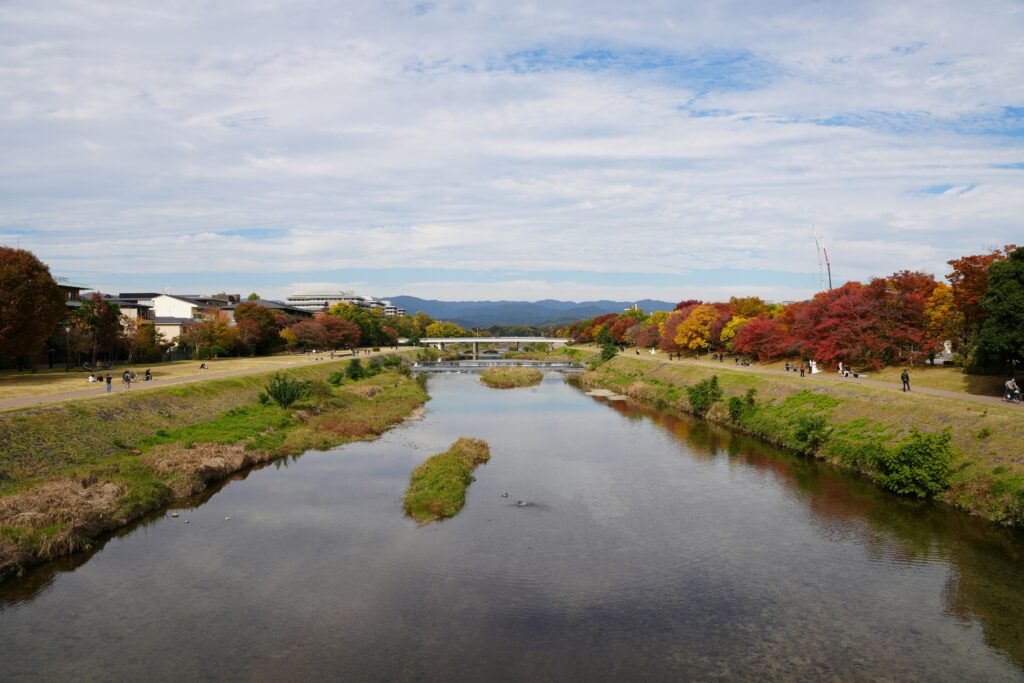
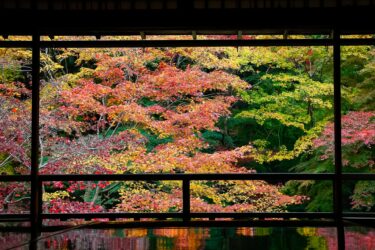
When the humidity breaks in October, the riverbanks turn into a patchwork of burnt orange and deep red. This is possibly the best time to be active.
The air is crisp, the sky is high and clear, and the path along the river is begging to be ridden. It’s the perfect season to rent a bike and ride along the river, stopping at sightseeing spots along the way.
Winter
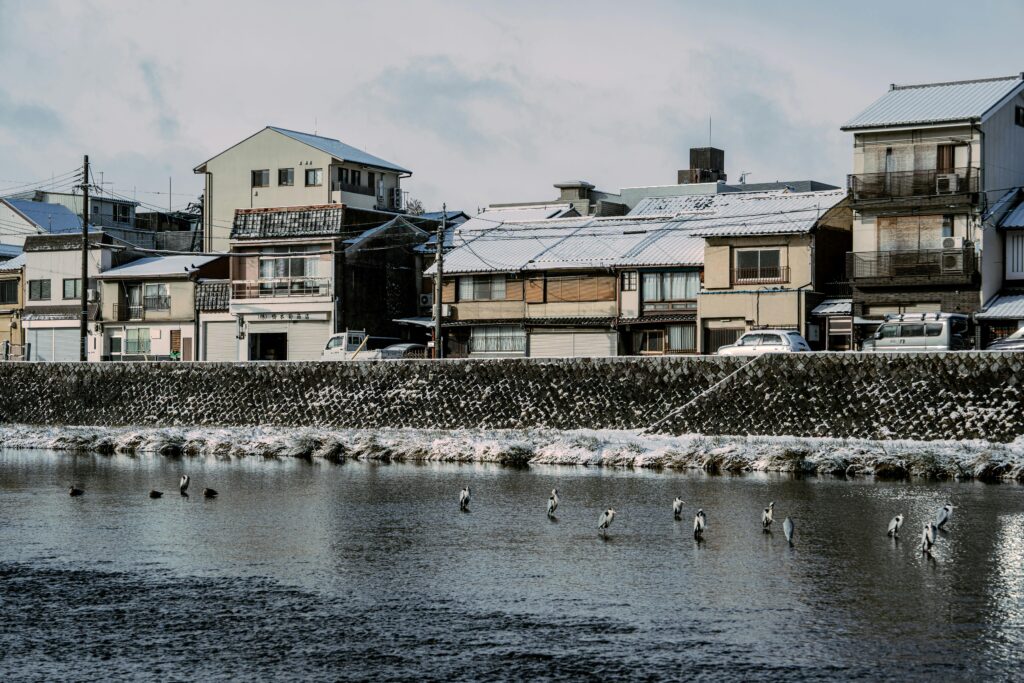
Winter in Kyoto is underrated. Yes, it’s cold, but the river in winter has a stark, serene beauty. The crowds disappear and migratory birds like mallards and egrets take over the shallows.
And if you are incredibly lucky, you might catch a day when snow falls. Seeing the white-capped mountains of Kitayama framing the dark flow of the river? That’s a memory you keep forever.
Iconic Spots Along the River
The Kamogawa Delta
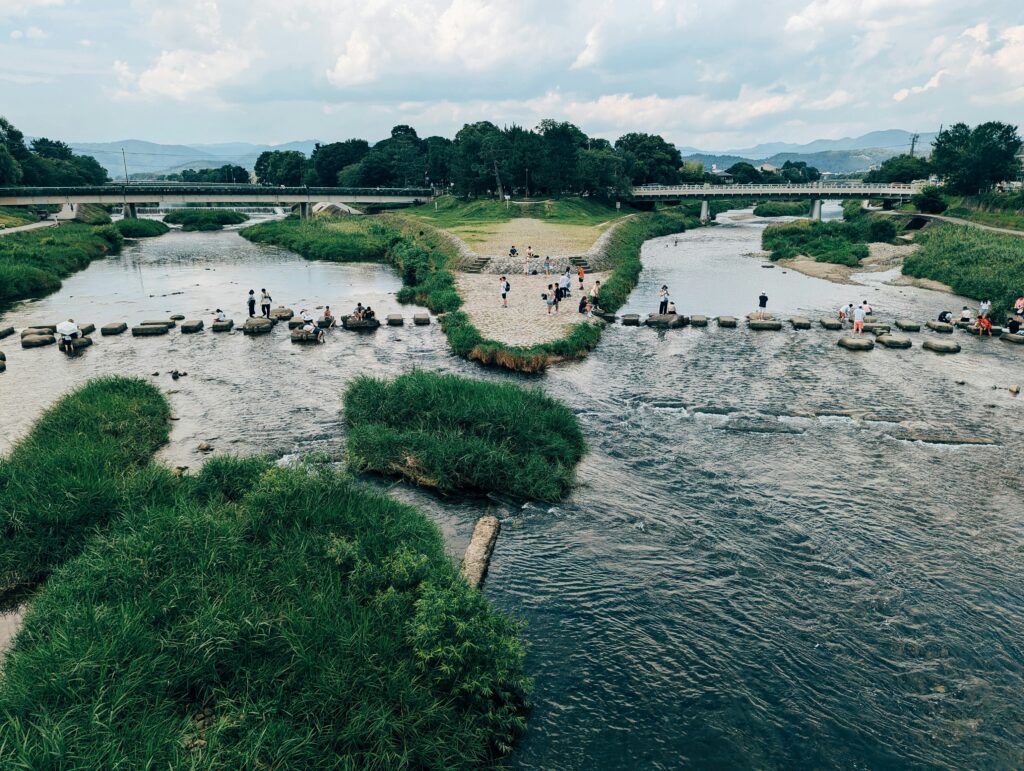
The delta is the triangular wedge of land where the Kamo River and the Takano River merge.
If you’re an anime fan, you might recognize it from shows like K-On! or The Tatami Galaxy. It’s a popular filming location, but for locals, it’s just the best place to hang out. You’ll see students practicing instruments, people napping on the grass, and kids jumping on the famous turtle stepping stones. Grab a beer or a coffee from a convenience store nearby and just sit here for an hour. You won’t regret it.
Sanjo Ohashi Bridge
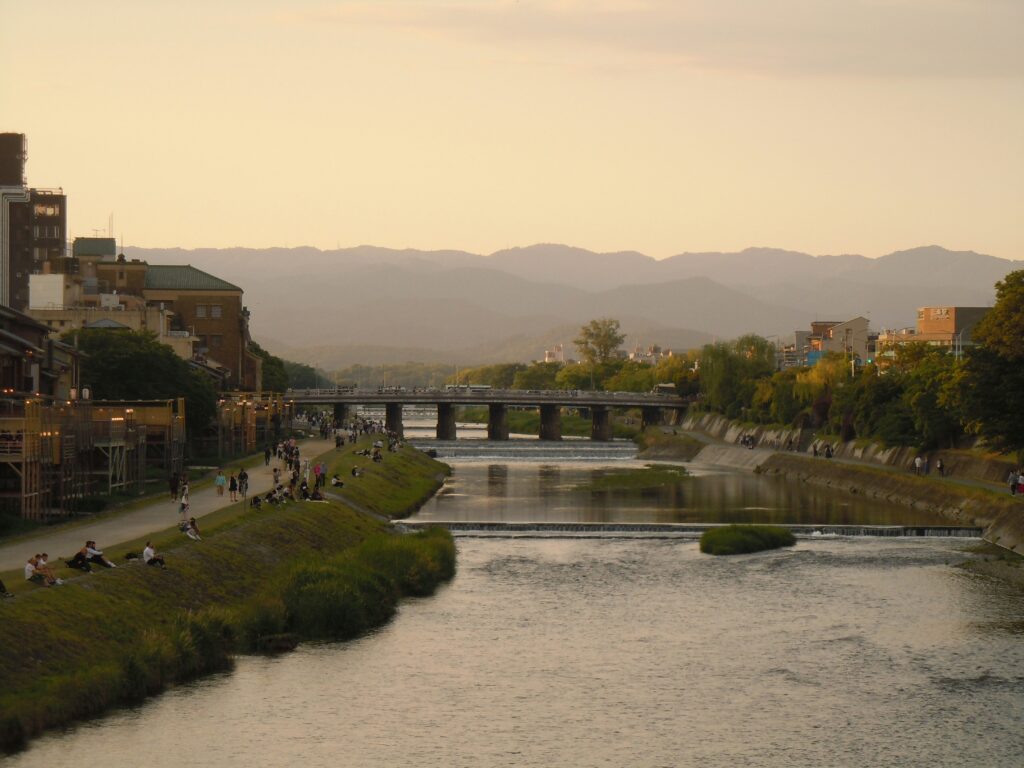
This bridge is history beneath your feet. It was the westernmost station of the Tokaido Road, the main route connecting Edo (present-day Tokyo) to Kyoto in the Edo period.
Today, it’s arguably the busiest meeting spot in the city. On Friday nights, the banks under the bridge are filled with young people drinking, playing guitar, and hanging out.
Popular Things to Do Along Kamogawa
You don’t need an itinerary to enjoy the river; you just need to show up. But if you want to make the most of it, here are a few suggestions.
Recreation & Exercise
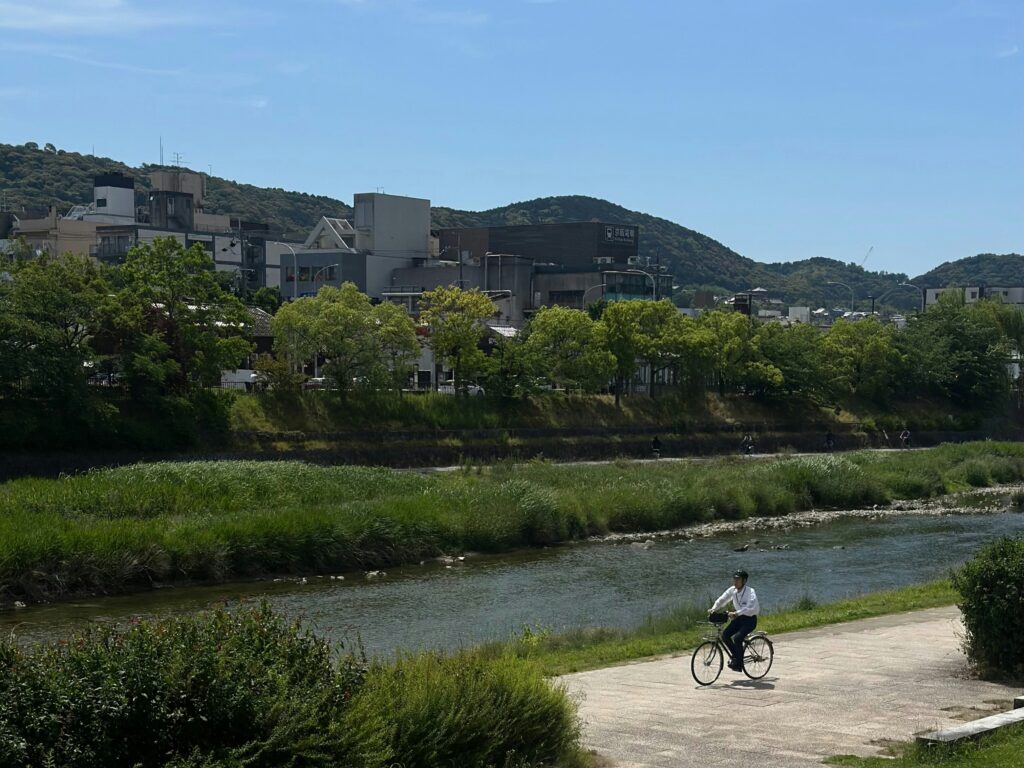
If you’re a runner, this is your track. You can run for miles without stopping for a traffic light. The path is flat, well-maintained, and marked with distance signs to destinations along the river. Early morning is best if you want the path to yourself.
Cycling along the river is also highly recommended. Rent a bike and just ride north. The further north you go, the greener and wilder the river gets. It’s a side of Kyoto most tourists never see, just twenty minutes from downtown.
Hop Across the Stepping Stones
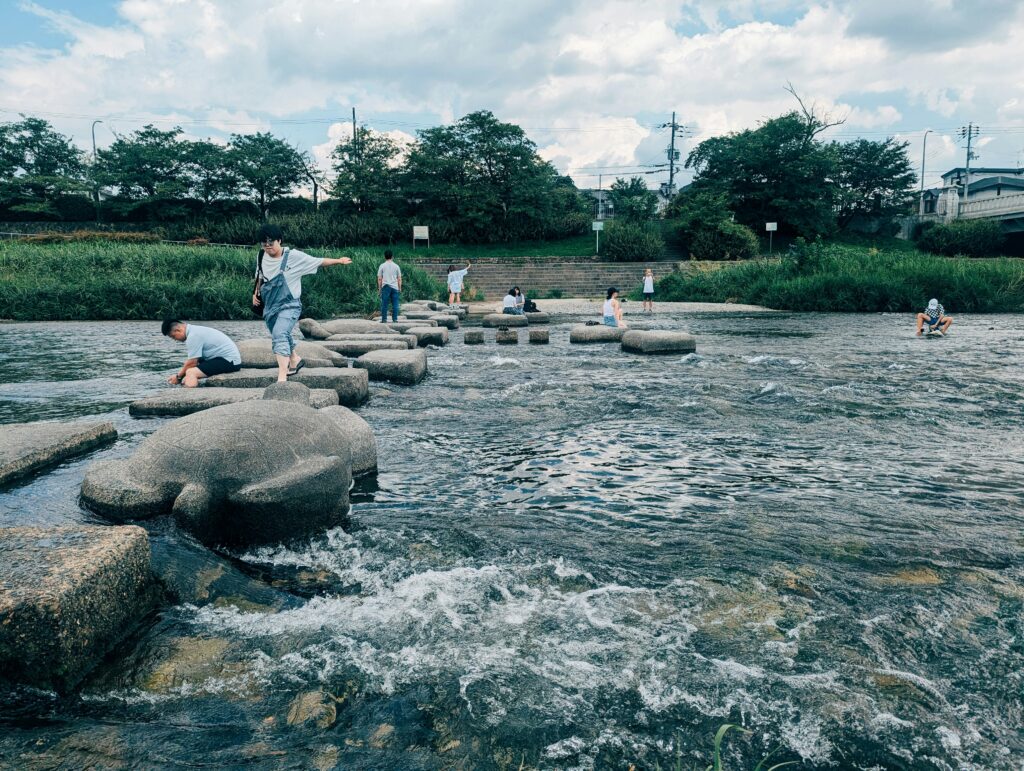
At several points along the river, there are large concrete stepping stones allowing you to cross from one side to the other.
At the Kamogawa Delta, you’ll find similar stones shaped like turtles and plovers. Watching grown adults nervously hopping from turtle to turtle with their work bags is a joyous sight. Just be careful—after a heavy rain, the water level rises and the turtles “dive” underwater. Don’t try to cross if the stones are wet!
5 Nearby Sightseeing Spots
Since the river cuts through the center of town, it’s the perfect jumping-off point for other sights. Here are 5 attractions you can find nearby:
- Shimogamo-jinja Shrine: A UNESCO World Heritage site located just north of the Delta in the Tadasu no Mori primeval forest.
- Pontocho Alley: As mentioned, the prime spot for atmospheric dining right next to the river.
- Nishiki Market: Known as “Kyoto’s Kitchen,” this covered market street is a short 10-minute walk from the river near Shijo. Great for street food, but usually very crowded.
- Yasaka-jinja Shrine: Just walk east from the river across Shijo Bridge, and you’ll run right into the bright orange vermilion gates of Yasaka Shrine.
- Hanamikoji Street: The famous Geisha district in Gion. It’s beautiful, but remember to be respectful—don’t chase the Geiko or Maiko for photos.
Dining and Nightlife: Kamo River Noryo Yuka
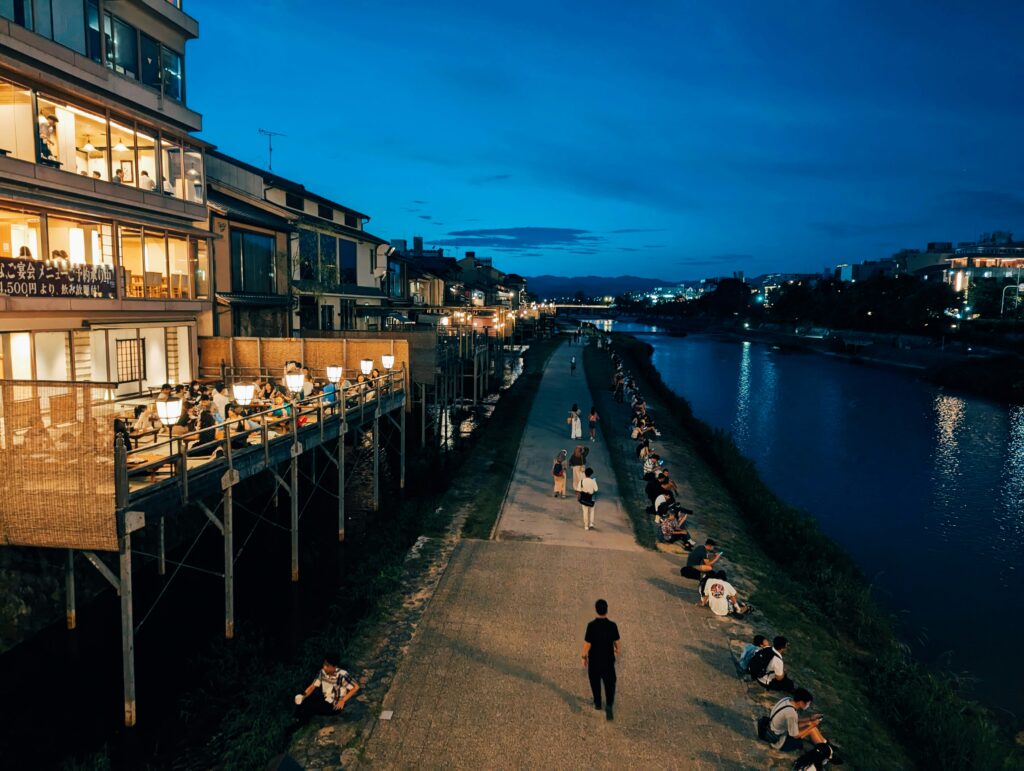
If you are visiting between *May and September, you have to experience noryo yuka.
This tradition dates back to the Edo period. Restaurants along the west bank of the river, specifically in the Pontocho and Kiyamachi areas, build temporary wooden decks (yuka) extending out over the flowing water.
Dining on the yuka is the ultimate way to beat the heat. The concept is that the flowing water cools the air above it, creating a natural air conditioner.
The decks are usually up from *May through September. In recent years, some have stayed up into October as the warm weather lingers.
In the peak heat of summer (July and August), most places only open the decks for dinner because lunch would be dangerously hot. However, in May and September, you can often enjoy yuka lunches, which is a lovely, breezy experience and usually much cheaper than the dinner courses.
There’s a misconception that yuka dining is exclusively for the wealthy. While it’s true that many high-end Kaiseki (traditional multi-course) restaurants offer yuka seating that can run you 10,000 yen or more, it’s changed a lot recently.
You can now find Italian bistros, French wine bars, and even a Starbucks with a yuka deck.
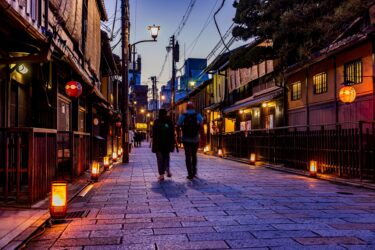
Another popular place to dine is Pontocho, one of Kyoto’s most atmospheric dining streets that runs parallel to the river. It’s a surprisingly narrow alley packed with restaurants, bars, and tea houses. The lantern-lit entrance sets a mood that feels centuries old. You can wander down the alley, check the menus posted outside (many are in English now), and see which places have decks out back.
You can also find eateries along many of the roads that line the river.
*Note: The specific dates the noryo yuka become available change each year. Check the official website for more information:
Directions to Kamogawa River
The river is hard to miss, but getting to the best parts requires a little navigation.
The Keihan Line is your best friend here. It runs underground directly parallel to the river.
- Gion-Shijo Station or Sanjo Station: Get off here for the downtown area, Pontocho, and the noryo yuka decks.
- Demachiyanagi Station: Get off here for the Delta, the stepping stones, and Shimogamo Shrine.
If you’re taking the Hankyu Line, get off at Kyoto-Kawaramachi Station. Take the eastern exits and you’ll pop up a short walk away from the river.