Visit enough of Kyoto’s ancient temples, shrines, and palaces, and you may begin to get used to hearing that these wooden buildings have stood through a thousand, sometimes two thousand years of history. Not only that, of course, but as the erstwhile capital of the nation throughout the Heian period (794-1185), many of these locations were host to emperors, shoguns, and important historical movers and shakers. What you might not expect, or at least expect to uncover, are the seemingly ordinary locations throughout the city that have ties to historical figures and events – even samurai battles, political conspiracies, and assassinations. Even during the Sengoku period in the 15th and 16th centuries, and the final years of the Edo period (1603-1868), Kyoto was at the center of power struggles that would ultimately transform Japan.
Today, many of the locations associated with these events can still be visited in downtown Kyoto. Some are marked by small monuments or signs tucked between modern buildings, while others may not have any particular markers. They’re a great reminder that history is all around you in Kyoto, and can make for a great treasure hunt on a walking tour around the city.
The Legendary Duel of Benkei and Minamoto no Yoshitsune at Matsubara Bridge
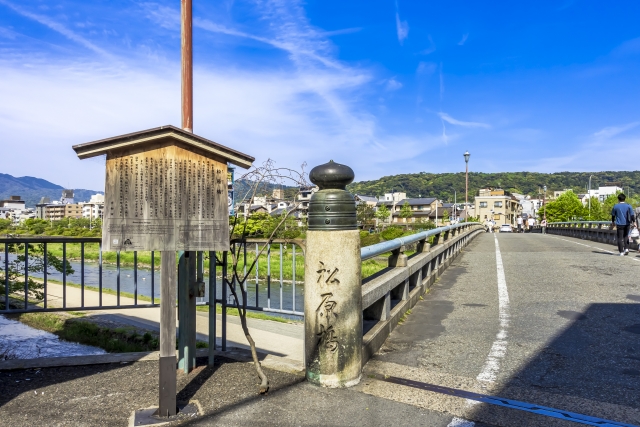
One of Kyoto’s best-known samurai legends is the dramatic encounter between the warrior monk Benkei and the young Minamoto no Yoshitsune (later a great samurai commander) at Gojo Bridge. According to the popular story, Benkei had vowed to collect 1,000 swords from samurai he defeated. He had already taken 999 when he encountered a young man named Ushiwakamaru, later known as Yoshitsune. Expecting an easy victory from such an unimposing adversary, Benkei challenged him to a duel. But despite Benkei’s considerable size and strength, the young warrior defeated him with his exceptional swordsmanship and agility. Impressed by Yoshitsune’s abilities, Benkei pledged his loyalty and became his devoted retainer. The pair went on to become famous figures in Japanese history and legend, fighting together during the Genpei War (1180–1185).
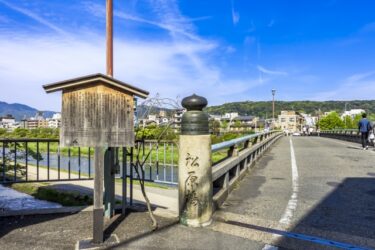
While there’s a fair element of myth in this story, the legend tells that the fight occurred on Gojo Bridge. Interestingly, though, the bridge referred to in the story is today’s Matsubara Bridge, just south of the Gion Shijo area. If you visit the bridge today, you’ll find a plaque on its west side with some notes on its historical significance, and you, too, can walk in the footsteps of these legendary warriors. Matsubara Bridge isn’t as highly trafficked as some other downtown Kyoto bridges, so it’s also a peaceful place to walk and enjoy a view of the Kamo River.
See Matsubara Bridge on Google Maps
Samurai Skirmish at the Ikedaya Incident Site
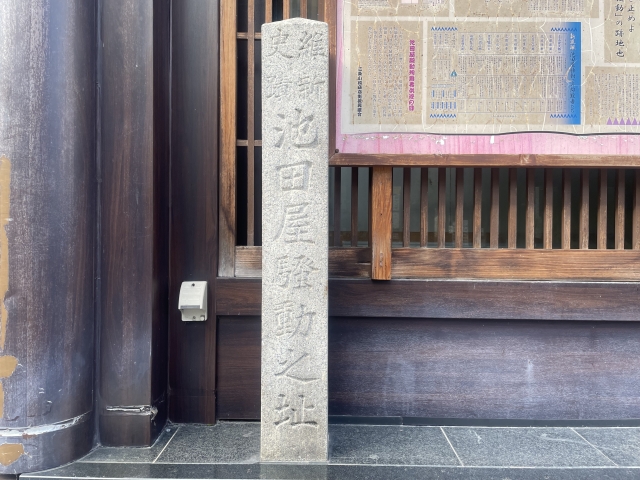
Just down Sanjo-dori Street off of Sanjo Ohashi Bridge (close to Sanjo and Kyoto Shiyakusho-mae Stations), you’ll find a restaurant front so ordinary you may end up just walking by it. Once the site of the Ikedaya Inn, it’s now an izakaya restaurant of nearly the same name (Izakaya Ikedaya Hananomai), and while you can certainly come here for a meal like at any restaurant, some of the samurai-themed decorations around the stairway up into the restaurant might be better appreciated with some of their historical context.
The Ikedaya Incident is one of the most famous episodes in the history of the Shinsengumi, a special samurai force that served the Tokugawa shogunate during the final years of the Edo period. On July 8, 1864, Shinsengumi members raided the Ikedaya Inn, where a group of pro-imperial samurai had gathered. The samurai were reportedly planning to set fires in Kyoto and abduct key figures as part of a larger political uprising, though there are multiple different accounts of this plan, and historians debate the details. The Shinsengumi launched a surprise attack, resulting in a violent confrontation inside the inn.
The incident became a turning point in the Bakumatsu period (the period at the end of the Tokugawa shogunate), intensifying the conflict between supporters and opponents of the shogunate. It also helped establish the Shinsengumi’s reputation as an influential force in Kyoto.
The original Ikedaya Inn no longer exists, of course, but a stone monument marks its former location near Sanjo-Kiyamachi, and if you’re interested in the history of the Shinsengumi, a meal at the themed izakaya that stands on the former site might be the perfect way to refuel before you continue exploring Kyoto.
See the Ikedaya Incident Site on Google Maps
A Swordfight on Sanjo Bridge
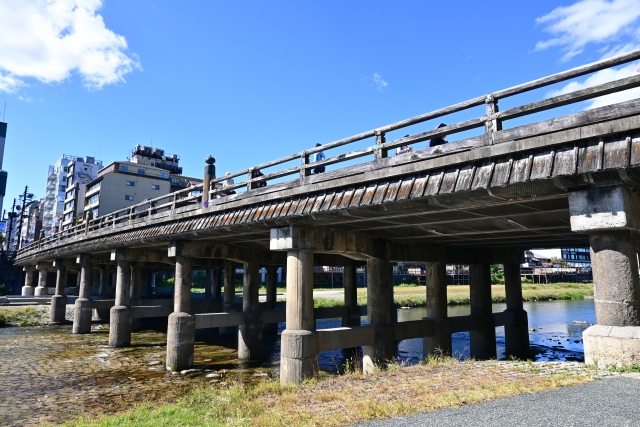
If you leave the former site of the Ikedaya Inn and approach the Kamo River, you’ll find Sanjo Bridge, one of Kyoto’s most historically significant bridges. Spanning the Kamo River, it’s served as an important transportation route since the Edo period and was once the eastern gateway to the city for travelers arriving along the old Tokaido road.
The bridge is also said to have connections to the Ikedaya incident: as the story goes, the fighting spilled out from the inn and along the street to the bridge, where one of the decorative metal caps on the bridge’s railing posts was hit with a sword during the skirmish.
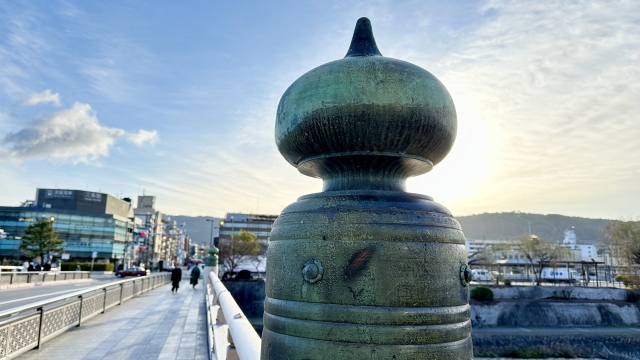
Today, Sanjo Bridge remains a major crossing point over the Kamo River in downtown Kyoto – and has a lovely view of the riverbanks and mountains surrounding the city.
See Sanjo Bridge on Google Maps
Assassination of Sakamoto Ryoma at the Site of the Former Omiya Inn
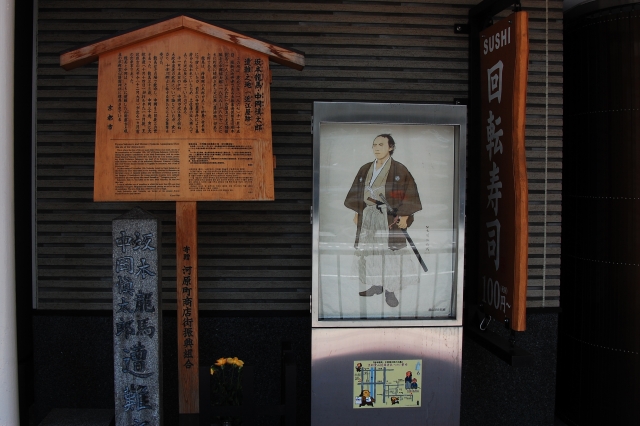
One of the most famous assassinations in Japanese history took place here in downtown Kyoto in what was once the Omiya Inn. On November 15, 1867, Sakamoto Ryoma, a samurai and political activist who played an important role in the movement to overthrow the Tokugawa shogunate, was staying at the inn when armed attackers broke in. Ryoma and his associate Nakaoka Shintaro were both seriously wounded. Ryoma died that night, while Nakaoka succumbed to his injuries two days later.
The original inn is no longer standing, but a memorial marks its former location near the intersection of Kawaramachi and Shijo.
See the site of the former Omiya Inn on Google Maps
Ambush & Attempted Assasination at the Former Teradaya Inn
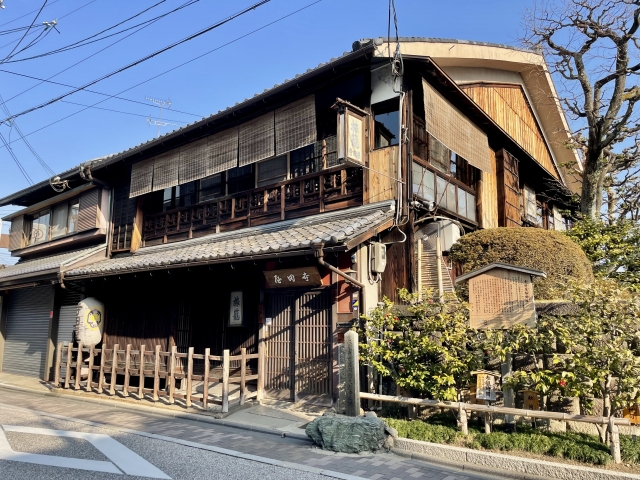
Although Ryoma eventually met his end at the Omiya Inn, it wasn’t the first attempt on his life. The first assassination attempt took place at another Kyoto inn, which is famous for two violent incidents involving members of pro-imperialist and pro-shogunate factions. Both known as the “Teradaya incidents,” the first took place on this site in 1862, when pro-imperialists met here to plan an assassination of an imperial regent and the shogun’s representative in Kyoto. Instead, they were ambushed and forced to surrender after nine of their members were killed.
The second Teradaya incident took place several years later in 1866, when an attempt was made on Ryoma’s life here. He was only saved by the quick action of his future wife, who fled her bath as the attackers entered the inn and ran to warn Ryoma in time for him to escape.
The original Teradaya Inn burned down in the Battle of Toba-Fushimi in 1868, but it’s since been rebuilt as a kind of small museum site you can visit and see displays about Ryoma and other Edo period history.
See the site of the Former Teradaya Inn on Google Maps
Kyoto’s history isn’t confined to the grandest museums, temples, and castles. Throughout even the downtown area, there are whispers of events from centuries ago that helped shape the history of Japan.