
For most travelers to Japan, Kyoto is the destination to experience Japan’s historical traditions, and it’s no wonder. The city is home to thousands of ancient temples and shrines; museums, traditional architecture, and even a thousand years since its time as the country’s capital, it’s still a hub for many traditional cultural practices. But just 30-40 minutes away by train is another destination with much of the same appeal. The quieter city of Nara is an ancient Japanese capital itself, where monumental Buddhist temples, sacred forests, historic streets, and free-roaming sacred deer create a very different kind of cultural experience.
So, if you’re planning a trip to Kyoto, is a visit to Nara worth it, or should you spend the extra day exploring Kyoto instead? The answer will ultimately depend on how much time you have and what you hope to experience, but if you’re interested in Japanese history, Buddhism, traditional architecture, and peaceful walks, Nara is well worth visiting. With a full day, you’ll be able to experience much more than its famous deer.
But Nara is close enough that it’s easily accessible for a day trip or for just a few hours. So let’s take a look at how to decide if Nara deserves a place in your Kansai itinerary.
Is Nara Worth It? The Short Answer
In short, Nara is worth visiting from Kyoto, particularly if you enjoy cultural and historical travel, but how high it sits on your priority list and how long you might want to dedicate to a visit are going to depend on both your interests and how much time you’re spending in the area.
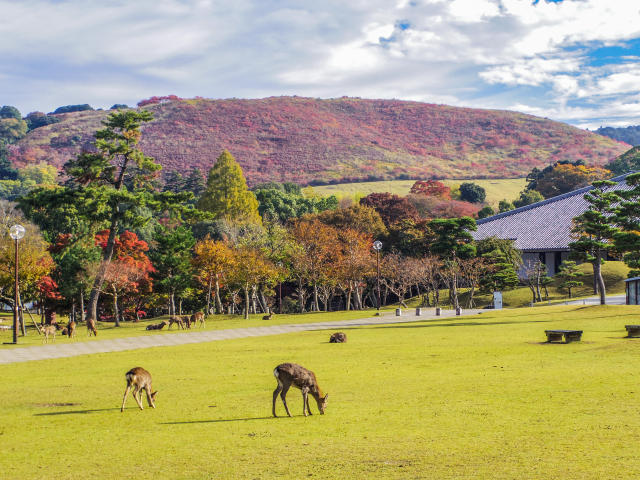
Kyoto is a larger and more populous city with a lot to see across its different neighborhoods, while Nara is more compact and can feel more relaxed. Many of its best-known cultural sites are located around Nara Park, where ancient temples and shrines are surrounded by open green spaces and wooded walking paths. While you can explore beyond this, its compact nature makes it well set up for day trip visits from Kyoto.
If you’re only staying in Kyoto for a couple days (See our First-Timer’s Guide: How Many Days Do You Really Need in Kyoto?), seeing Nara may be less essential. With a limited time frame like this, you’re probably going to enjoy your time more focusing on Kyoto’s major sights instead of rushing back and forth between two cities. If you’re going to be in Kyoto for a longer period (5-7 days), however, Nara is especially worth a visit if you’re interested in a quieter contrast to central Kyoto, learning about Japan’s earliest permanent capital, and seeing some of Japan’s most important Buddhist temples and cultural treasures.
What Makes Nara Different from Kyoto
Nara can feel a little bit like a smaller or quieter version of Kyoto, but the two cities represent different periods in Japanese history.
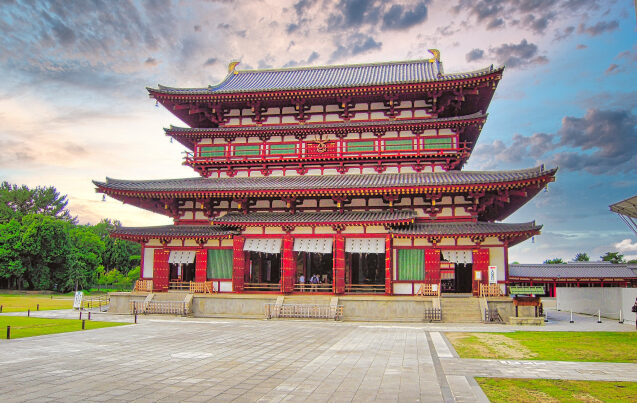
Nara became Japan’s first permanent capital in the eighth century and played an important role in the development of Buddhism and the early Japanese state. Many of its major temples were established during this period, and their scale reflects the political and religious importance of the city.
Kyoto became the imperial capital later and remained the center of Japanese political and cultural life for more than a thousand years. Its historic attractions are spread across many neighborhoods, from the traditional streets of Gion to the temple districts of Higashiyama and the bamboo groves of Arashiyama.
In Nara, sightseeing is more concentrated: you can walk between major temples, shrines, gardens, and wooded areas while remaining close to the city center. If Kyoto’s most popular areas feel a bit too busy for your liking, Nara might be a good change of pace. Sites here aren’t completely empty of crowds, but the pace of travel may feel less overwhelming during peak periods.
Things to Do in Nara from Kyoto
Visit Todai-ji Temple and the Great Buddha
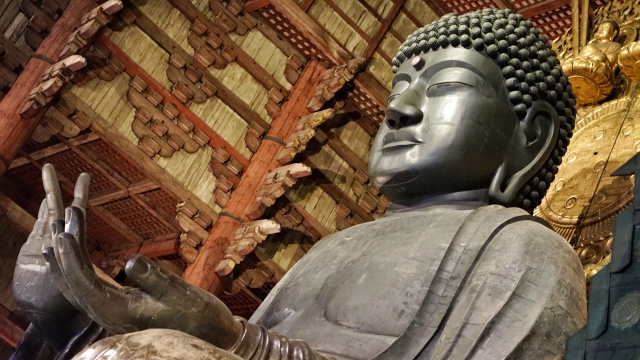
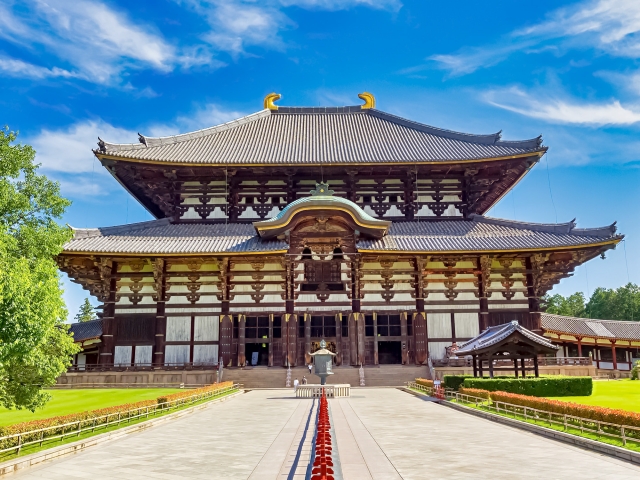
Todai-ji is Nara’s most famous temple and an essential stop for first-time visitors. Even if you’re already visited a number of temples in Kyoto, Todai-ji’s scale might surprise you. A reflection of Nara’s position as an early center of political and religious power, Todai-ji Temple is home to the Great Buddha, a monumental 15 meter (49 foot) bronze statue – the largest bronze statue of the Buddha in the world, in fact. Even the enormous hall in which the Buddha is enshrined, the great daibutsuden (literally, the “Great Buddha Hall”) is remarkable: until 1998, it was the largest wooden building in the world.
When you visit, be sure to allow enough time to explore the temple grounds, as well. The surrounding area also provides views of Nara Park and access to other historic sites.
Walk Through Nara Park

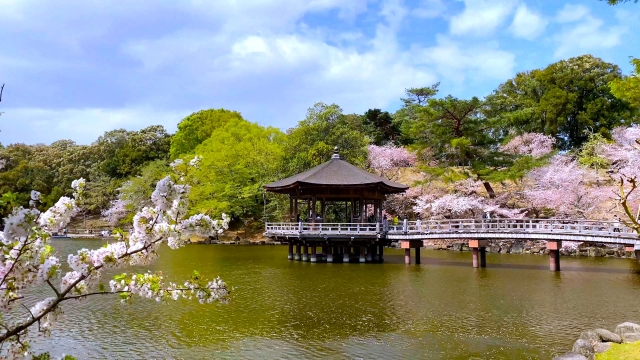
Nara Park is known around the world for its free-roaming deer. The animals are considered sacred, and have become one of the city’s most recognizable symbols. You can even purchase special “deer crackers” to feed them with, and might even see the deer bow their heads when they approach for a cracker, another behavior they’ve become famous for. Just be aware that Nara deer are used to receiving these snacks, and can get a little demanding!
The deer are wild animals, so visitors should treat them with care. Avoid teasing or chasing them, and do not feed them anything other than approved deer crackers. It is also a good idea to keep maps, snacks, and loose belongings secure, as curious deer may try to investigate them.
The park, however, is much more than just a place to see deer. Its open green spaces connect many of Nara’s most important temples and shrines, so the walk between attractions is a part of the experience.
Explore Kasuga Taisha Shrine
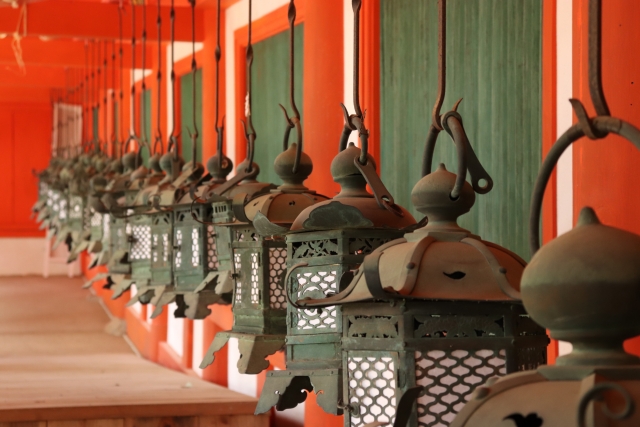
Located within a forested area on the eastern side of Nara Park, Kasuga Taisha Shrine is known for its many stone and bronze lanterns, which line the approach and decorate the grounds. Walking through the surrounding forest can make you feel like you’ve really stepped away from the city, even though the shrine is still close to Nara’s major attractions.
See Kofuku-ji Temple
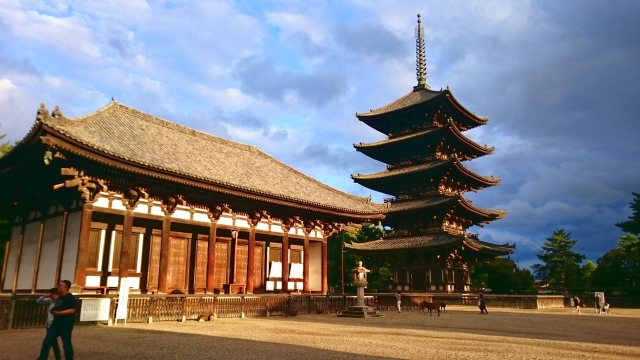
Kofuku-ji Temple has a long connection with the powerful Fujiwara clan (a family of imperial regents) and remains one of the city’s most important historic sites. The temple once featured over a hundred buildings, but even today its remarkable five-storied pagoda is a recognizable feature of the Nara skyline. Entrance to this ancient temple, which dates back to the founding of the Nara capital in the 8th century, is free, but history buffs may want to pay the entrance fee to the National Treasure Hall to see its collection of ancient Buddhist statues and other valuable works of art.
Kofuku-ji Temple is located near the entrance to Nara Park, so it’s easy to include at the beginning or end of a sightseeing route.
Wander Through Naramachi
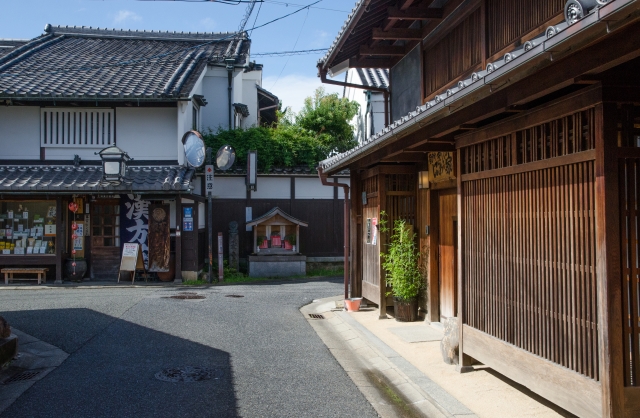
For a different side of Nara, head south toward Naramachi, a historic merchant district with narrow streets and traditional townhouses.
Unlike the monumental architecture around Nara Park, Naramachi is great for a more intimate view of the city’s past. The neighborhood is home to small museums, cafés, shops, and preserved buildings, so it can be a nice area for a walk, or to stop for lunch.
Is a Half-Day Enough for Nara?
A half-day is enough to see several of Nara’s most famous attractions: you can visit Nara Park, see the deer and Todai-ji Temple, and include one additional site like Kofuku-ji Temple or Kasuga Taisha Shrine.
But a half-day visit will feel rushed if you also want to explore Naramachi, visit a garden or museum, or enjoy a relaxed meal along the way. If you want to take your time exploring,
A full day gives you more flexibility. You can begin with the major landmarks in the morning, have lunch without watching the clock, and spend the afternoon exploring quieter areas. It also allows you to adjust your route based on the weather, crowds, and your interests.
Kyoto to Nara: How Easy Is a Day Trip?
A day trip to Nara is one of the easiest excursions from Kyoto. Direct trains connect the two cities, and the journey generally takes less than an hour, depending on the service you choose. From Kyoto, you can use either the JR Nara Line or Kintetsu Railway. JR trains depart from Kyoto Station and arrive at JR Nara Station, while Kintetsu trains arrive at Kintetsu Nara Station. Kintetsu Nara Station is closer to Nara Park and several of the city’s major attractions, making it convenient for visitors who want to begin sightseeing immediately.
From either station, you can walk, take a local bus, or use a taxi to reach the main sightseeing area. Once you arrive around Nara Park, many of the major sites are within walking distance of one another.
So, is Nara Worth a Full Day from Kyoto?
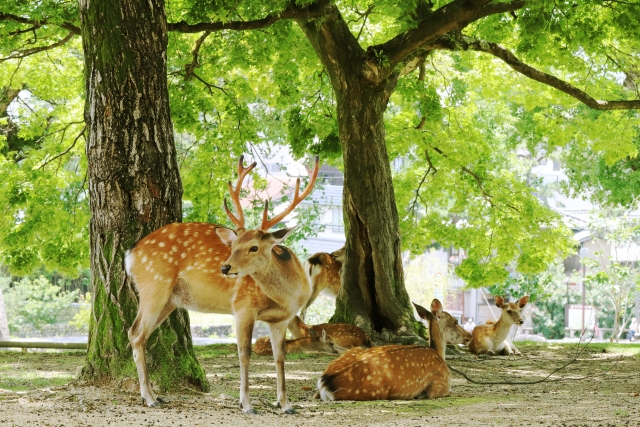
Depending on the priorities of your trip, it certainly might be! Nara may be known best by many for its famous deer, but the city has some truly incredible historical sites and peaceful walks that will make it worth a longer visit for some travelers. With just a few days in Kyoto, making the trip may be a bit of a stretch for your itinerary, but with at least five, a half-day is a great idea, and if you’re staying longer, you may want to extend your trip to this older former capital and venture even further past its main sights.